
Your Home Is Beautiful. But Is It Ready to Sell?
You've spent years making your home your own. You've carefully selected furniture, chosen colors you love, and arranged rooms to suit your lifestyle. So why might your Realtor suggest changing some of those things before putting your home on the market?
The answer is simple: decorating and staging serve two very different purposes. Decorating reflects your personal taste and how you enjoy living in your home. Staging is about presenting that same home in a way that appeals to the broadest possible audience of buyers—and helps them imagine living there.
And the difference can have a significant financial impact.
According to the National Association of Realtors' 2025 Profile of Home Staging, 83% of buyers' agents said staging helps buyers envision a property as their future home. Sellers' agents also reported that staging increased the dollar value of offers by up to 10% compared with similar unstaged homes, while 49% observed that staged homes spent less time on the market.
The Psychology Behind Great Staging
Professional staging isn't simply about bringing in beautiful furniture. It's about understanding how people perceive space, how color influences emotion, and how furniture placement can change the way a room feels.
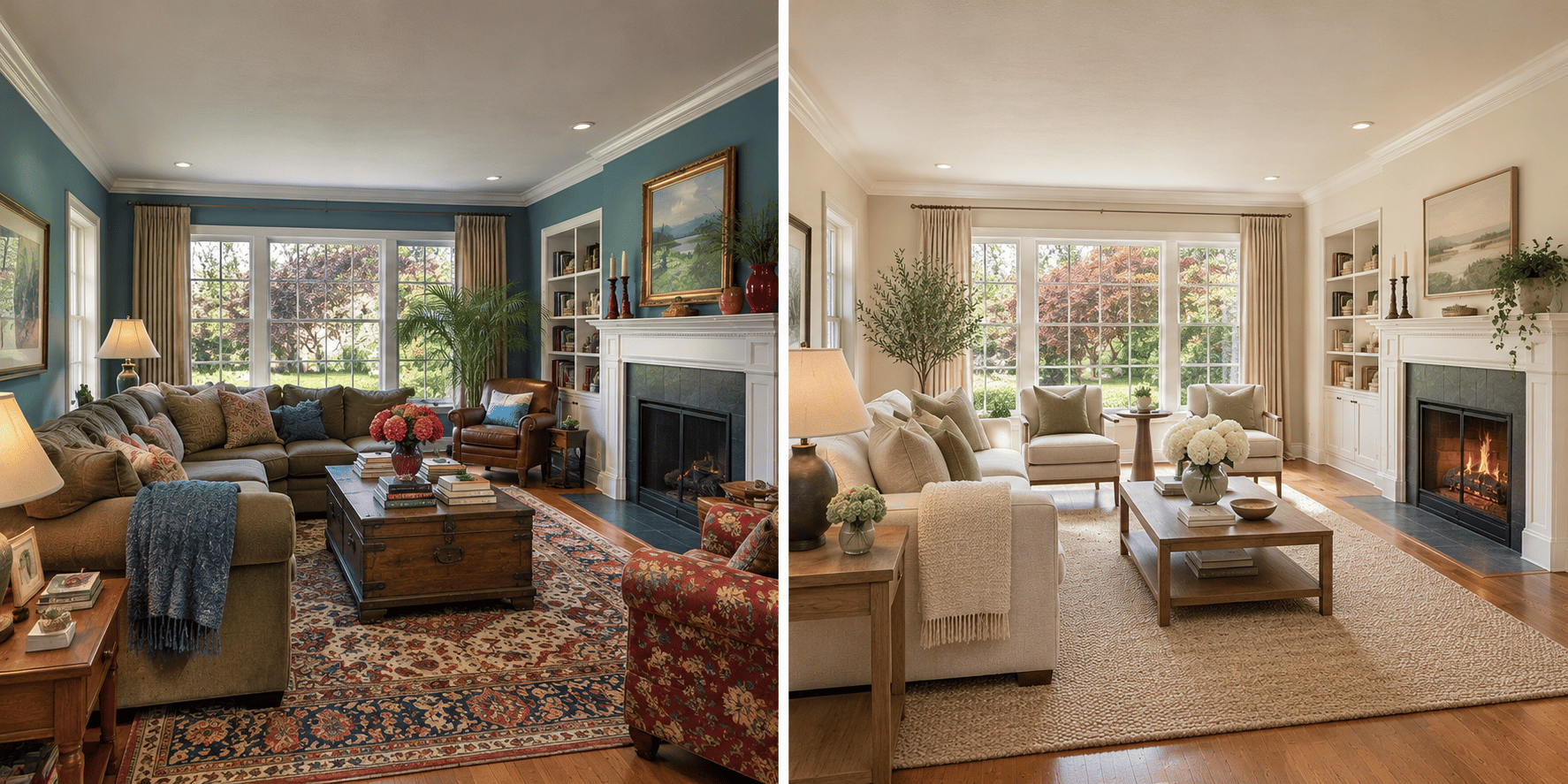
Color creates an emotional response. That dramatic navy dining room or richly colored living room may be stunning, but strong colors can sometimes dominate a buyer's attention, making it harder to appreciate the room itself. A carefully selected neutral palette—perhaps a soft cream, warm white, or the palest buttercream—can create a sense of openness, warmth, and continuity. Color still has its place, but it should complement the architecture rather than compete with it.
Scale and proportion influence how spacious a room feels. Your oversized sectional may be the most comfortable sofa you've ever owned, but if it overwhelms the living room, buyers may perceive the space as smaller than it actually is. Stagers select furnishings that are appropriately proportioned, creating breathing room around furniture and allowing buyers to appreciate the room's true dimensions.
Furniture placement directs the eye and guides movement. One of the most important principles of staging is preserving sightlines and creating natural traffic flow. A sofa that blocks a beautiful window, chairs that interrupt the path to a patio, or furniture arranged entirely around a television can distract from a home's best features. Thoughtful staging opens those views, creates inviting conversation areas, and allows visitors to move naturally through the space.
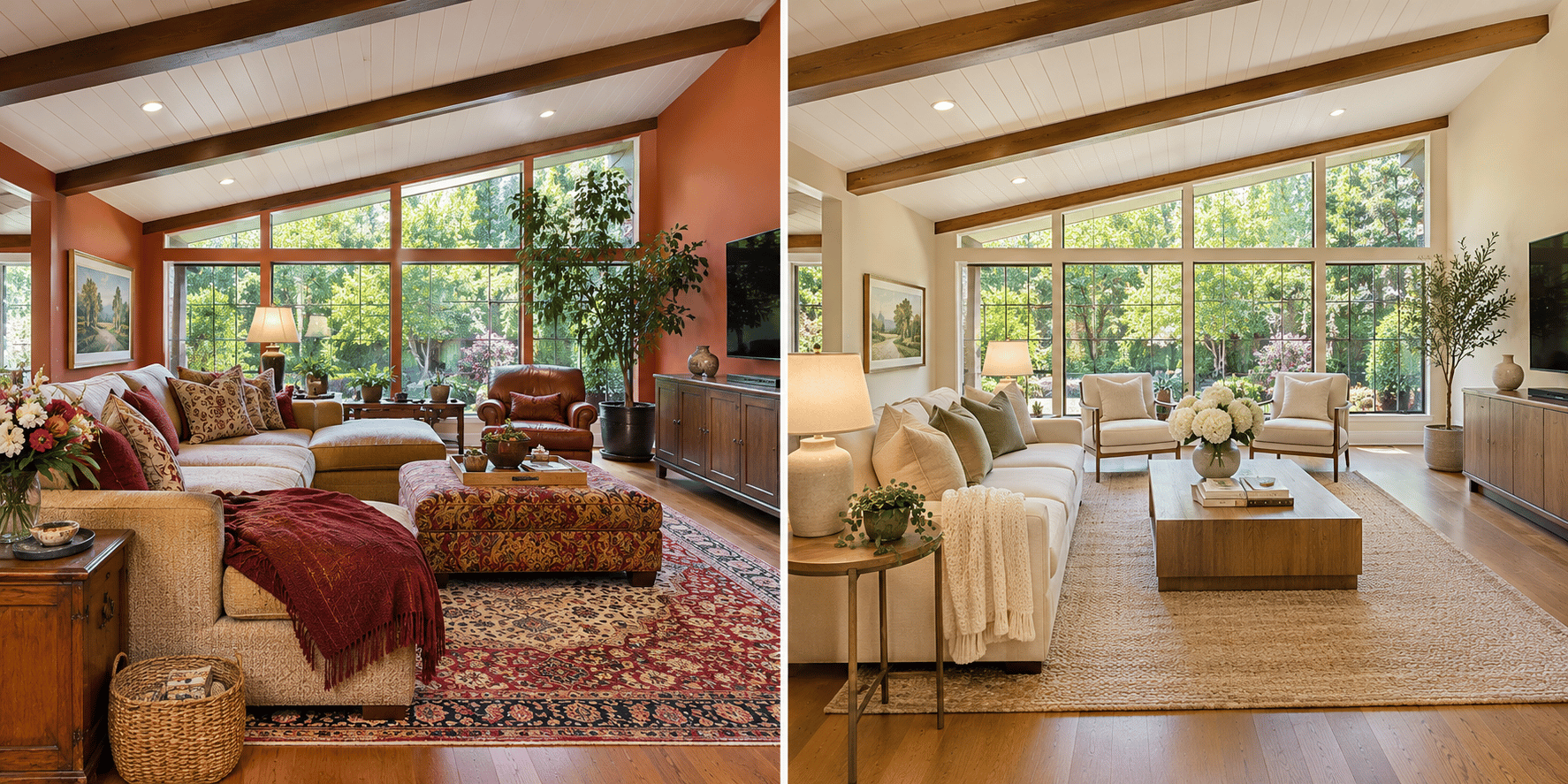
Seeing Is Believing
Notice how changing the wall colors, furniture scale, and placement creates a more open, harmonious environment while leaving the architecture unchanged.
First Impressions Begin Before the Front Door
For most buyers, their first introduction to a property is through photographs online. A well-staged room can photograph beautifully, communicate a sense of spaciousness, and inspire buyers to schedule a showing.
But staging must also work in person. A home that looks wonderful in photographs but feels crowded or awkward when buyers walk through it misses the point. The best staging creates a consistent experience, from the first online impression to the moment a buyer steps inside.
The Goal Is to Sell the Home, Not the Furniture
Great staging isn't about stripping away every bit of personality or making every home look alike. A classic San Francisco Victorian deserves a different approach than a contemporary Peninsula home or a traditional East Bay residence.
The objective is to highlight what makes each property special while minimizing distractions that might prevent buyers from seeing its potential.
And perhaps that's the most important distinction of all: when you're living in your home, it should reflect you. When you're selling it, it should help buyers picture themselves there.
That shift in perspective can make all the difference.
Source: National Association of Realtors, 2025 Profile of Home Staging. Statistics reflect surveyed real estate agents’ observations.
Illustrations: AI-generated conceptual before-and-after examples; not photographs of actual listings.