Mastering the 1031 Exchange: A Step-by-Step Guide to Tax Deferral
For real estate investors, Section 1031 of the Internal Revenue Code is one of the most powerful wealth-building tools available. By performing a "like-kind" exchange, you can defer 100% of your capital gains tax liability, allowing your equity to grow unhindered as you transition from one investment to the next.
However, the IRS is notoriously strict regarding the execution of these exchanges. To navigate this process successfully, investors must balance complex tax laws with tight market logistics.
The Golden Rules: Qualifications for Success
Before diving into the paperwork, your transaction must meet four fundamental "Property Qualifications":
-
Investment Intent: Both the property you sell (the "relinquished" property) and the one you buy (the "replacement" property) must be held for productive use in a trade or business or for investment.
-
Like-Kind Requirement: The properties must be of the same nature or character. This is broad: you can exchange a residential rental for raw land, or an office building for an apartment complex.
-
Reinvest All Cash: To avoid "boot" (taxable cash left over), you must reinvest every dollar of net proceeds generated from your sale.
-
Equal or Greater Value: The new property must have a purchase price equal to or greater than the sale price of the property you sold.
The Realtor Advantage: Negotiating a Safe Timeline
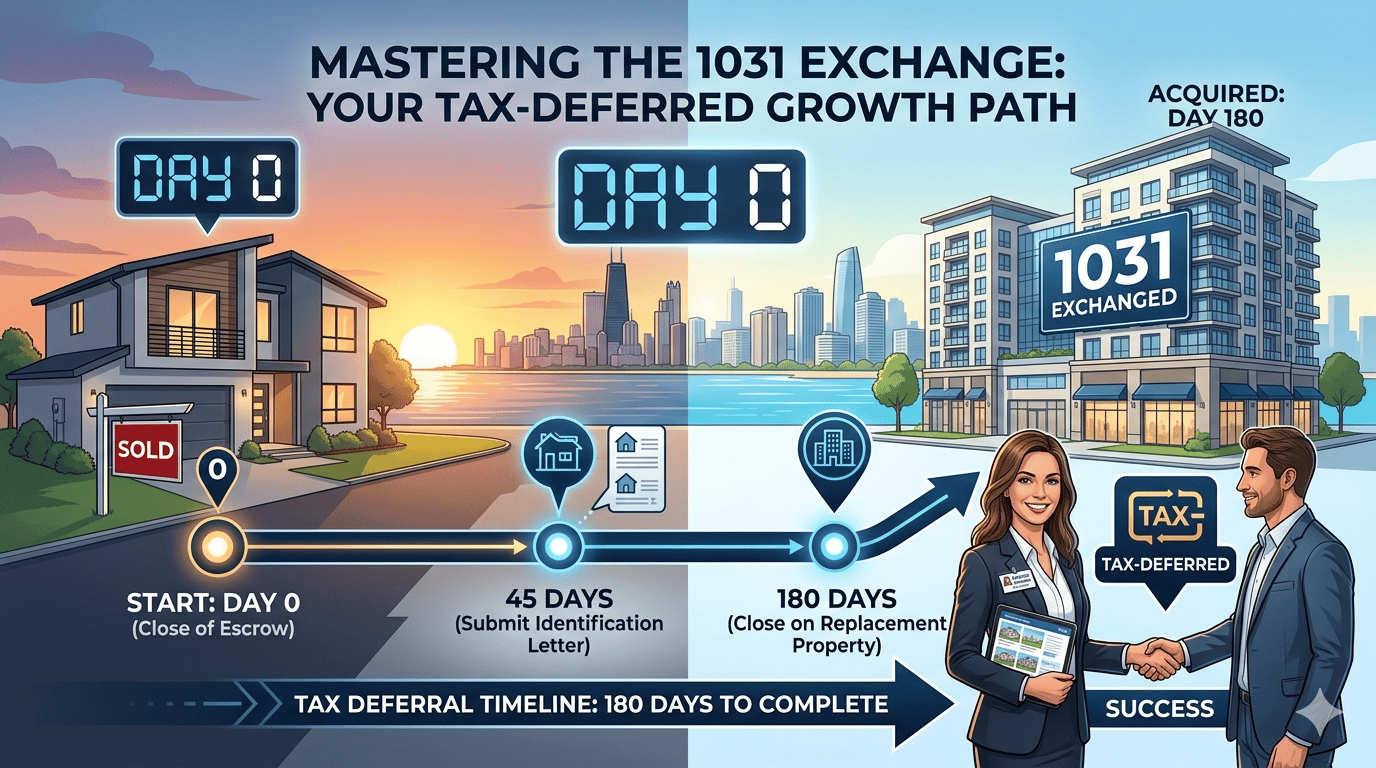
The biggest risk in a 1031 Exchange is the clock. Once your sale closes, you have exactly 45 days to identify and 180 days to close on the new property. There are no exceptions.
This is where the value of a highly qualified realtor becomes indispensable. A skilled agent does more than just list a property; they strategically coordinate the sale of your relinquished property while simultaneously scouring the market for replacement options. By negotiating "subject to 1031 exchange" clauses and managing escrow timelines, a realtor creates the "safety buffer" needed to ensure you aren't left with a massive tax bill because a deadline was missed.
Phase 1: The Sale and Setup
The most critical rule of a 1031 Exchange is that you cannot touch the money. If the sale proceeds ever enter your personal bank account, the exchange is void.
-
Establish a Qualified Intermediary (QI): You must open an account with a QI before the close of escrow on your sale. They act as the neutral third party to hold your funds.
-
Add Cooperation Language: Your sale contract must include specific 1031 language reflecting your intent to exchange.
-
Execution: At the closing table, you will sign an Exchange Agreement that assigns your rights in the sale contract to the QI.
Phase 2: The Race Against the Clock
Once your property closes (Day 0), your deadlines begin.
The 45-Day Identification Period
By midnight of the 45th day, you must submit a written, unambiguous identification of your potential replacement properties. You generally follow the 3-Property Rule (identifying up to three properties of any value) or the 200% Rule (identifying any number of properties as long as their total value doesn’t exceed double your sale price).
Phase 3: The Purchase and Closing
The final leg is the acquisition of your new investment.
-
The 180-Day Deadline: You must acquire and close on your replacement property by midnight of the 180th day.
-
Managing Deposits: You can pay the initial earnest money deposit out of pocket and receive a reimbursement at closing, or request that the QI disburse the funds directly from your exchange account.
Final Documentation: Once in contract, your realtor and QI coordinate with the escrow officer to ensure the tax-deferred funds are wired correctly.
Phase 4: Reporting to the IRS
Finally, you must report the exchange using Federal Form 8824 for the year in which your relinquished property was sold. This information flows to your Federal Schedule D and is typically sufficient for state reporting as well.
The Bottom Line
While a 1031 Exchange may seem intimidating, it is a manageable process when you have the right team. By engaging a Qualified Intermediary and partnering with a realtor who understands the nuances of exchange timelines, you can protect your equity and build long-term wealth.
Always seek the advice of a tax accountant or attorney to ensure your specific transaction aligns with the current tax code.